Overview of WAAS

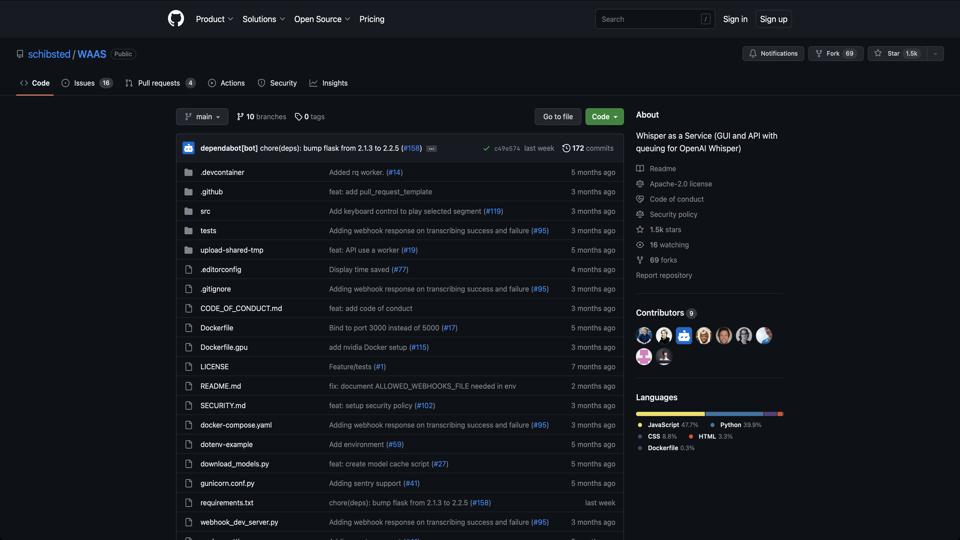
WAAS, developed by Schibsted and hosted on GitHub, is an open-source tool designed to simplify web development workflows, particularly around Webpack configurations. It functions as a “Webpack as a Service” platform, allowing developers to run, analyze, and optimize Webpack builds remotely without heavy local setup. Released under an open-source license, it’s aimed at teams looking to streamline bundle analysis, performance optimization, and CI/CD integration for web applications. With a focus on ease of use, WAAS integrates well with modern JavaScript ecosystems and is suitable for both small projects and large-scale enterprise environments.

Key Details

  • Repository: github.com/schibsted/WAAS
  • Language: Primarily JavaScript/Node.js
  • License: MIT
  • Stars on GitHub: Approximately 200+ (as of last check)
  • Main Use Case: Webpack bundle analysis and optimization

Features

WAAS offers a robust set of features that make it a valuable addition to any web developer’s toolkit. Here’s a breakdown:

  • Remote Webpack Execution: Run Webpack builds in the cloud, reducing local machine load and enabling scalable processing.
  • Bundle Analysis: Provides detailed reports on bundle sizes, dependencies, and potential optimizations using visual charts and metrics.
  • CI/CD Integration: Easy hooks for tools like GitHub Actions, Jenkins, or CircleCI to automate build analysis in pipelines.
  • Customization Options: Supports custom Webpack configs and plugins, with API endpoints for programmatic access.
  • Security Features: Built-in support for secure token-based authentication and data encryption for sensitive builds.

Pros

  • Highly efficient for teams dealing with large Webpack setups, saving time on local computations.
  • Excellent documentation on GitHub, including setup guides and examples, making it beginner-friendly.
  • Free and open-source, with active contributions from the Schibsted community.
  • Visual analytics tools are intuitive and help identify performance bottlenecks quickly.
  • Scalable for enterprise use, with options for self-hosting or using Schibsted’s hosted version.

Cons

  • Requires internet connectivity for remote execution, which may not suit offline development environments.
  • Limited to Webpack-specific workflows; not ideal for projects using alternatives like Rollup or Parcel without adaptations.
  • Occasional latency in cloud builds during peak times, depending on server load.
  • Community support is growing but not as vast as more popular tools like Webpack Bundle Analyzer.
  • Advanced customizations may require familiarity with Node.js and API integrations.

Conclusion

Overall, WAAS is a solid choice for developers and teams seeking to optimize their Webpack processes without the overhead of local infrastructure. It scores an 8/10 in my rating, thanks to its practicality and integration capabilities. If you’re working on JavaScript-heavy projects, I recommend checking it out on GitHub and contributing if possible. For alternatives, consider tools like Webpack Bundle Analyzer or Lighthouse for broader performance insights.

Join the AI revolution!
Building the world's finest AI community is no walk in the park, do you want
to be a part of the change? Let's work faster, smarter and better!