Review of Auto-GPT
Overview
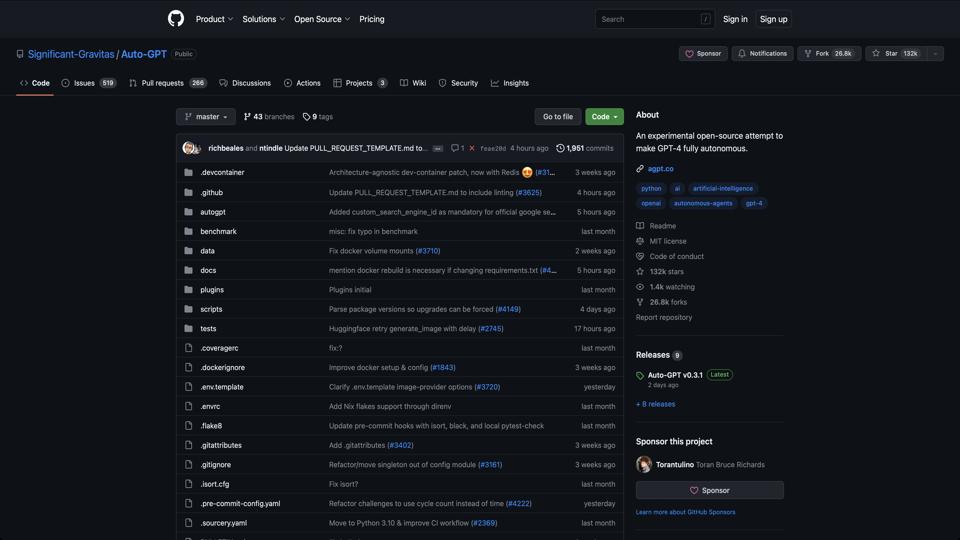
Auto-GPT is an open-source experimental project that leverages the power of GPT-4 (or similar large language models) to create autonomous AI agents. Developed by Torantulino and hosted on GitHub, it allows users to set high-level goals, and the AI breaks them down into subtasks, executes them, and iterates until the goal is achieved. This tool represents a step towards more independent AI systems, going beyond simple chat interfaces like ChatGPT by adding autonomy, memory, and internet access capabilities.
Released in early 2023, Auto-GPT quickly gained popularity for demonstrating the potential of AI agents in real-world tasks such as research, coding, and content creation. However, it requires access to OpenAI’s API, which involves costs, and it’s still in active development with contributions from the community.
Key Features
- Autonomous Task Execution: The AI generates, prioritizes, and completes subtasks based on the user’s initial prompt.
- Memory Management: Uses vector databases like Pinecone for long-term memory, allowing the agent to remember past actions and learn from them.
- Internet Access: Integrates with tools for web browsing, searching, and interacting with online resources.
- Multi-Modal Support: Can handle text, images, and even speech in some extensions.
- Plugin System: Extensible with plugins for additional functionalities, such as file management or API integrations.
- Open-Source: Free to use, modify, and contribute to under the MIT license.
Pros and Cons
Pros
- Empowers users to automate complex, multi-step processes without constant supervision.
- Highly customizable and extendable through community contributions.
- Demonstrates cutting-edge AI capabilities, inspiring innovation in agent-based systems.
- No subscription fee for the tool itself (though API usage costs apply).
Cons
- Can be resource-intensive, requiring a powerful machine and stable internet.
- API costs can add up quickly for extensive use, as it makes multiple calls to models like GPT-4.
- Potential for errors or “hallucinations” in AI reasoning, leading to inefficient or incorrect task completion.
- Setup requires technical knowledge, including Python, API keys, and possibly Docker.
- Still experimental; may have bugs or require frequent updates.
How to Get Started
- Clone the repository from GitHub.
- Install dependencies using pip (requires Python 3.8+).
- Set up your OpenAI API key and any necessary environment variables.
- Run the script with a goal prompt, e.g., “Research the best laptops under $1000.”
- Monitor the agent’s progress and intervene if needed.
For detailed instructions, refer to the project’s README.
Conclusion
Auto-GPT is a groundbreaking tool for anyone interested in AI automation and agentic workflows. It’s particularly valuable for developers, researchers, and productivity enthusiasts looking to experiment with self-improving AI. While it has limitations in cost and reliability, its open-source nature and rapid community growth make it a must-try for exploring the future of AI. Rating: 4.5/5 stars.
If you’re new to AI tools, start with simpler alternatives like LangChain before diving into Auto-GPT. For updates, follow the GitHub repo or join related communities on Discord.